Introduction
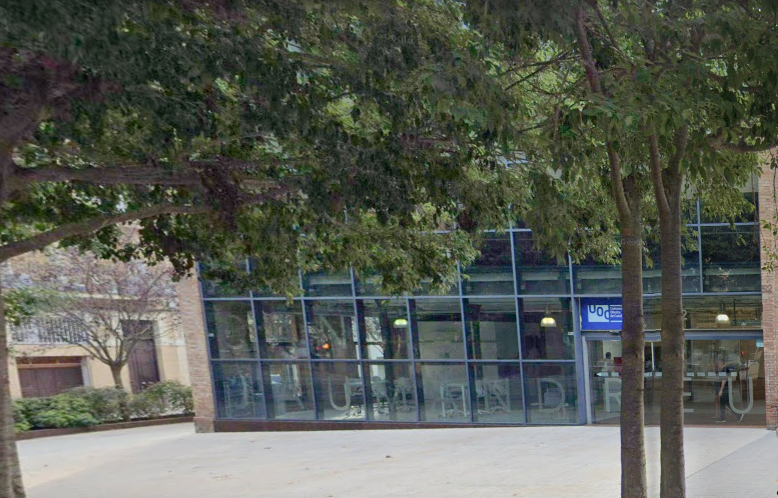
- The Association for the Study of Language Acquisition (AEAL) is organising a Training Day on Language Acquisition, which will take place on 5 February 2027 at the Universitat Oberta de Catalunya (UOC), in Barcelona.
- The event is particularly aimed at PhD students and early-career researchers (within one year of completing their PhD) who conduct research in the field of language and communication acquisition, development, and disorders.
- The aim is to provide a space for learning, exchange, and discussion on research methodologies, tools, and strategies, as well as to foster contact and collaboration among researchers in training.
 |
 |
Information
More information on how to participate and on the content of the sessions can be found in the following tabs.
Programme
Programme Training Day on Language Acquisition
5th February 2027
Location: Universitat Oberta de Catalunya
C/ del Perú, 52 (Barcelona)
| 8:50–9:00 | Welcome and training day presentation | 10 min | |
| 9:00–10:30 |
Workshop 1. Methods and Tools for Online Experimentation in Language Research Anastasiia Ogneava, Marie Skłodowska-Curie postdoctoral fellow at the UiT The Arctic University of Norway and an assistant professor at the Department of Developmental and Educational Psychology at the University of Santiago de Compostela |
1 h 30 | |
| 10:30–11:00 | Coffee break + poster | 30 min | |
| 11:00–12:00 | Brief oral presentations I – 4 × 15 min | 1 h | |
| 12:00–13:30 |
Taller 2: Artificial Intelligence for Language Acquisition Research: Methods and Applications Dr. Marvin Lavechin, CNRS Researcher, Laboratoire d’Informatique et Systèmes, Marseille, France |
1 h 30 | |
| 13:30–15:00 | Break / Lunch networking | 1 h 30 | |
| 15:00–16:00 | Brief oral presentations breves II – 4 × 15 min | 1 h | |
| 16:00–16:30 | Coffee break + poster | 30 min | |
| 16:30–18:00 | Workshop 3: Assessing Language from a Dynamic and Multimodal Perspective Núria Esteve-Gibert (UOC), Alfonso Igualada (Logopeda y Doctor en Ciencias del Lenguaje, UOC) & equipo proyecto Multilearn (UOC) |
1h 30 | |
| 18:00–19:30 | AEAL Assembly | 1 h 30 |
Call of proposals
Call for Papers – Training Day on Language Acquisition of AEAL
Introduction
-
PhD students and
- young researchers (within one year of completing their PhD) and their thesis supervisors are invited to present work related to their research projects.
- Both completed research and work in progress will be accepted, including studies at early stages, data collection or analysis processes, and preliminary results. Contributions that allow participants to share methodological issues, research challenges, or aspects that could benefit from discussion with other researchers will be particularly valued.
- The work must be presented by a PhD student.
- Thesis supervisors will be listed as co-authors of the contribution.
- Contributions may be presented in oral or poster format.
- Deadline: 15 November 2026
Decision:
- The AEAL Board of Directors will review and evaluate the proposals.
- Acceptance decisions will be communicated to applicants by email on 4 December.
- Registration is free for AEAL members. Become a member: https://aeal.eu/nuevos-socios/
- For further information, you can contact us by AEAL email (aeal@aeal.eu).
Registration
Everyone attending the Training Day must register before 7 January 2027. If you are an author, supervisor, or thesis director but will not attend the Training Day, you do not need to register.
Registration is free for AEAL members.
If you are not a member, you can become a member for €30, which entitles you to one year of membership and attendance at the Training Day (including the three workshops, presentations, two coffee breaks, and lunch).
Bank account of the Association for the Study of Language Acquisition (AEAL):
Caja Rural de Asturias
IBAN: ES10 3059 0064 7831 1511 1324
Registration is required by completing the form before 7 January 2027.
|
 |
Key dates
- 15 November 2026 Submission of abstracts
- 4 December 2026 Notification of acceptance
- 7 January 2027 Registration deadline
- 5 February 2027 Training Day
Workshop abstracts
|
|
Workshop 1. Methods and Tools for Online Experimentation in Language ResearchAnastasiia Ogneava, Marie Skłodowska-Curie postdoctoral fellow at the UiT The Arctic University of Norway and an assistant professor at the Department of Developmental and Educational Psychology at the University of Santiago de Compostela |
|
The workshop provides a theoretical and practical introduction to a range of tools available for designing, implementing, and administering online experiments in language research, with particular attention to their applications in psycholinguistics, language acquisition and processing, and related fields. Different platforms and environments will be presented, such as Gorilla Experiment Builder, PsychoPy/Pavlovia y Labvanced. Their main features, possible applications, and criteria for selecting the most appropriate tool depending on the research design and objectives will be discussed. Using concrete examples, the different stages involved in creating an online experiment will be addressed: defining the experimental structure, preparing and presenting stimuli, configuring blocks and conditions, randomisation and counterbalancing, recording responses and reaction times, and exporting and organising the data obtained. Methodological aspects specific to online research will also be discussed, including participant recruitment and monitoring, control of participation conditions, data quality and reliability, the advantages and limitations of remote data collection, and ethical and data protection issues. During the practical part of the workshop, participants will use Gorilla Experiment Builder to design and implement a simple experimental task, putting into practice the content covered previously. The workshop aims to provide an overview of the resources currently available and offer practical criteria and tools to enable predoctoral researchers to design and implement online experiments adapted to their own research questions. |
|
 |
Workshop 2. Artificial Intelligence for Language Acquisition Research Methods and ApplicationsDr. Marvin Lavechin, CNRS Researcher, Laboratoire d’Informatique et Systèmes, Marseille, (France) |
|
|
|
|
|
Workshop 3: Assessing Language from a Dynamic and Multimodal PerspectiveNúria Esteve-Gibert (UOC), Alfonso Igualada (Logopeda y Doctor en Ciencias del Lenguaje, UOC) & equipo proyecto Multilearn (UOC) |
|
In language research, as well as in clinical and educational practice, traditional tests are commonly used to measure children’s performance on linguistic tasks involving vocabulary, segmental phonology, or morphosyntax. These assessments are typically static, evaluating performance at a specific point in time. This introduces substantial linguistic, cultural, and social bias. In this workshop, we will approach assessment by considering other linguistic dimensions that are crucial for communication, such as prosody and gesture, while systematically examining the individual’s potential for language learning. The workshop will combine theoretical and practical explanations and will comprise two interconnected parts:
1) Dynamic assessment of children’s language: using practical cases involving children aged 2 to 7 years, participants will dynamically assess different language skills, including vocabulary, syntax, pragmatics, phonology, and narrative. Key concepts in dynamic assessment will also be illustrated, including prompting strategies, modifiability scales, and the use of specific mediated learning strategies for each language skill. 2) Systematic observation and coding of multimodal data: through practical activities based on real data, participants will manually code gestures, prosody, and pragmatics, together with other grammatical components, using ELAN software and following the recommendations of the M3D gesture-coding system (Rohrer et al., 2025). In addition, participants will be introduced to the automatic coding of facial movements (using OpenFace) and body movements (using OpenPose). |
|